

✨ Key Takeaways
AI avatars are evolving from experimental novelties into strategic brand assets that provide scalable, consistent, and cost-effective video communication. By building a branded digital spokesperson like Ryanair or GrowthRocks, companies can significantly increase their content velocity and audience recognition across various internal and external channels.
Scalable Communication Infrastructure — AI avatars allow companies to move beyond one-off video projects and build a repeatable system for internal and external communications.
Operational Efficiency and Savings — Using digital spokespeople can lead to significant reductions in training time and production costs, as demonstrated by Ryanair's 70% reduction in classroom training.
Consistency and Brand Recognition — A recurring AI presenter helps build audience trust and brand equity by providing a consistent face, tone, and visual universe for video content.
Strategic Character Design — The success of an avatar depends on defining its role, voice, and boundaries within the brand universe rather than just focusing on its visual appearance.
Clear Use Case Distinction — AI avatars are best for high-frequency, informative content like news updates or onboarding, while humans should still handle high-empathy or leadership messages.
Reading time: 4 minutes · Audience: CMOs, Communications Leaders, and Heads of Learning & Development (L&D). · Level: Intermediate
AI Avatars Are Becoming Brand Assets. Here’s How to Build One Properly
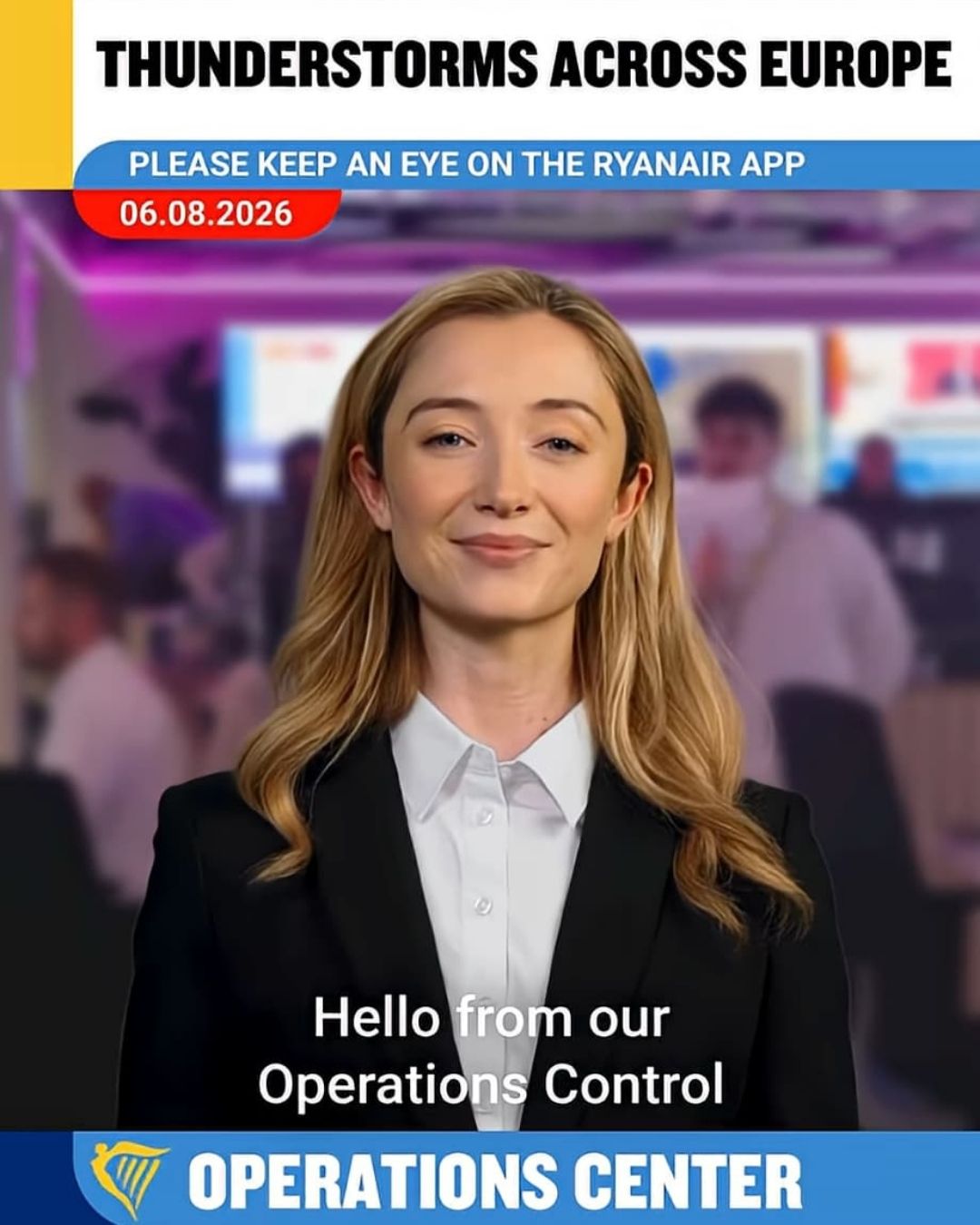
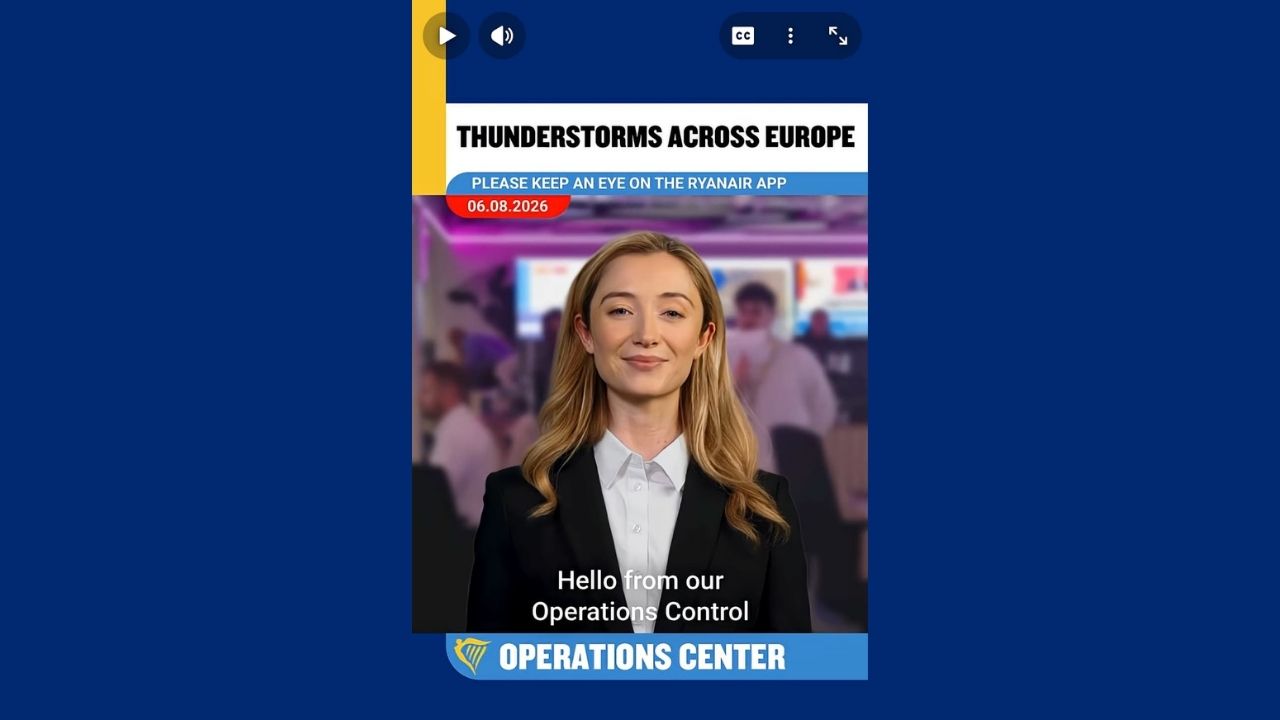
Ryanair has a new kind of spokesperson. She doesn’t need a studio booking, a production day, or another take before delivering the company’s latest update. She is an AI avatar. And the interesting part isn’t the technology behind her. It’s what Ryanair has decided to do with it.
That’s the question companies should be asking about AI avatars now. Not can we create one? What role could one play inside our communication strategy?
From Ryanair to Roxie, this article makes the strategic case for a branded digital spokesperson and shows where it works, where it doesn’t, and how to build it properly so it becomes a recognizable, repeatable brand asset rather than a one-off AI experiment.
What Ryanair understood about AI avatars
If you’ve seen Ryanair’s AI-presented social updates, you’ve already felt the appeal: the same face, same tone, same “show up” potential every time there’s something to say. But the more important story is what sits beneath the social clips: the idea that video can become scalable communication infrastructure across the business.
According to Synthesia’s own 2025 case study and awards submission, Ryanair scaled AI-powered video communications across an organization with more than 15,000 cabin crew, producing 50+ internal videos and reporting a 70% reduction in classroom training (https://www.synthesia.io/awards-2025). That figure is vendor-reported, not independently audited — but it lines up directionally with independent academic research: a 447-participant University College London study published in Computers & Education found AI-generated teaching videos produced learning outcomes statistically equivalent to human-made ones, with participants finishing the AI version faster (UCL Discovery, 2024). It doesn’t matter which vendor helped make this possible. What matters is the operating model behind it.
Three lessons worth noting:
Repeatability: The next announcement doesn’t mean rebuilding production from zero — the format, presenter, and workflow already exist.
Consistency: Same presenter, same tone, same visual universe — that kind of continuity can help recognition compound into attention over time.
Scale: A model that works once can replicate across departments, languages, and markets.
Ryanair’s avatar isn’t interesting because it’s artificial. It’s interesting because Ryanair gave AI-generated video a business role.
An AI avatar isn’t just a faster way to make videos
Treating an avatar as a video-production shortcut misses the point. The strategic move is to create a new branded communication asset: a spokesperson you can deploy at will, around which you build formats, workflows, and governance. The value is a recognizable format, presenter, and recurring communication system.
The proposition is simple: create the spokesperson once, then build the communication system around it. The avatar doesn’t replace the humans behind the brand — it adds another way for the brand to show up, on demand.
What can a company AI avatar actually do?
If you’re a CMO, Comms leader, or Head of L&D, here’s where a branded digital spokesperson starts to earn its keep:
Company announcements
Product launches and feature updates
CEO/company updates where executive filming isn’t necessary
Weekly or monthly company news
Internal communications and policy updates
Employee onboarding modules that get revised frequently
Training and compliance content
Customer education and how-tos
Explainer videos for support portals
Event announcements and recaps
FAQ videos for sales and success teams
Recurring social video formats (e.g., “Friday features,” “Monthly metrics”)
Multilingual communications for global teams and markets
Industry/news briefings for clients or internal stakeholders
Important nuance: not everything should be delivered by an avatar. Use it where synthetic video creates operational leverage: speed, scale, consistency, not where empathy, leadership presence, or nuance carry the message.
Meet Roxie: How we use an AI avatar ourselves
We didn’t just study this idea. We built our own.
Meet Roxie, GrowthRocks’ AI avatar. On our YouTube channel, Roxie hosts two recurring formats: the GrowthRocks News Bulletin, a dated weekly round-up of AI, marketing, and tech news, and AI The Academy, our episodic series on AI and growth marketing, now past its 36th episode. Every Bulletin she presents carries an on-screen “AI Generated Newsroom” label, so there’s never any ambiguity about who – or what – is speaking.
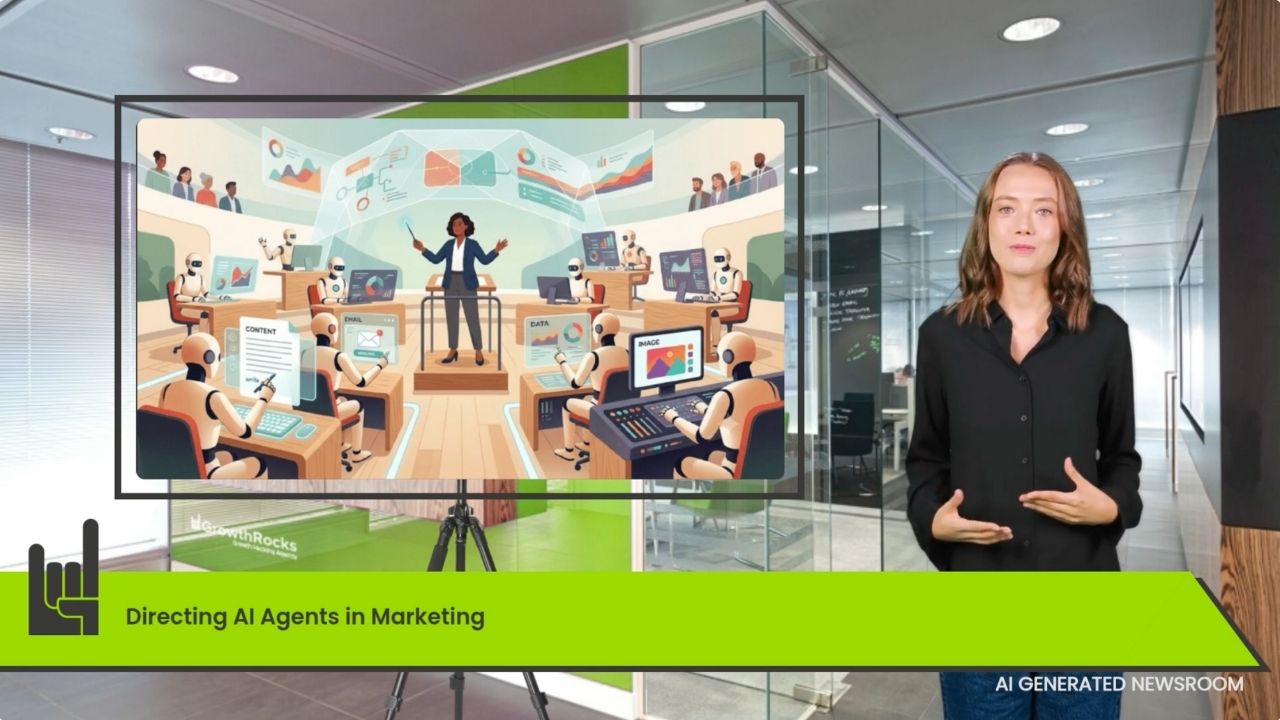
You won’t find us boasting about what tool we used or how the voice was generated. That’s not the story. The story is why Roxie exists: to give us a named, recognizable presenter who can show up on a schedule, deliver updates, and turn what would otherwise be a string of disconnected videos into a media property people recognize on sight.
Roxie helps turn disconnected videos into a clear, branded series. Over time, that repetition builds equity: audiences begin to think, “That’s Roxie from GrowthRocks.”
Early results: since Roxie launched, average views per video have grown roughly sixfold, from about 50 to about 300. It’s a small sample, but the trend is the point: she’s becoming a recognized, trusted source for our audience, not a novelty people click once and forget.
The avatar is the easy part. The character is the hard part.
Companies often jump straight to avatar aesthetics: gender, clothing, backdrop. Those decisions matter, but they’re downstream. The strategic work starts with character and role design.
Questions worth answering before you even touch the visual:
Who is this person inside the brand universe?
Why does the company need them?
Who are they speaking to?
What subjects do they own and what should they never communicate?
What tone do they carry (formal, playful, authoritative, expert)?
Should audiences know their name?
What recurring formats will they host?
How closely should they mirror the brand’s visual identity?
Where do they fit within your broader channel mix?
When should a real employee or leader appear instead?
If your only avatar brief is “make her look professional,” you don’t have an avatar strategy yet.
Why create a company avatar at all?
Organize the business case around five strategic benefits:
Communication velocity
Plenty of useful updates never get produced because coordinating people, locations, and filming doesn’t justify a 90-second message. An avatar in a defined format flips that economics: if it’s worth saying, it’s now fast to publish.Consistency
Same presenter. Same personality. Same visual universe. Same tone. That kind of continuity can help build recognition over time — Marq’s 2019 State of Brand Consistency survey linked consistent branding to revenue gains of up to 33% among the companies it studied.Content scalability
A single communication concept can support multiple videos and recurring series. Once you define the show, you can run new episodes whenever you need.Access to video as an everyday format
Video stops being reserved for “big campaigns.” It becomes an everyday, repeatable medium for operations, learning, and customer touchpoints.A recognizable brand property
Do this well and the avatar becomes a brand asset in its own right—like a newsletter masthead or a podcast host. “From Ryanair to Roxie” isn’t just a catchy phrase; it reflects a shift from sporadic content to a system audiences recognize on sight. That trust transfer is measurable: a 2025 study in the Journal of Theoretical and Applied Electronic Commerce Research found that trust built in an AI avatar carries over directly into trust in the product and brand behind it.
Building a company AI avatar: the do’s and don’ts
Do
Give the avatar a defined role and mission.
Give it a recognizable personality aligned with your brand.
Connect it to your visual identity and motion design.
Decide what subjects it owns (and what it doesn’t).
Build recurring formats and publishing cadences around it.
Establish tone, language, and script rules for consistency.
Keep human review and ownership for governance and approvals.
Be transparent that it’s an AI-generated spokesperson.
Use it where scale, speed, and consistency matter.
Define when a human spokesperson should appear instead.
Don’t
Create one just because AI avatars are trending.
Default to a generic “corporate presenter” with no voice.
Treat it like a stock model detached from your brand.
Let it communicate everything under the sun.
Use it randomly once every six months.
Let every script sound different and ungoverned.
Let it publish sensitive information autonomously.
Try to deceive audiences into believing it’s human.
Replace humans where empathy or leadership presence matters.
Put the avatar in every communication simply because you can.
Governance goes further than scripts and tone. If the avatar is modeled on a real person’s likeness or voice, get written consent that explicitly covers AI use and voice cloning — not a one-time release. Put an approval workflow in place so scripts and finished videos are reviewed before they publish, and decide in advance who can pull a video if it turns out to be wrong, outdated, or manipulated by someone outside the company. Disclosure fits here too: IAB research published in 2026 found that nearly half of consumers already expect brands to disclose when an ad uses an AI voice or avatar, and that disclosure was linked to a higher — not lower — likelihood to purchase. Transparency is a trust-builder here, not a liability to manage around.
Some messages still need a human
A credible avatar strategy needs clear boundaries around when it should and shouldn’t be used. In moments where human presence carries real weight — a serious company crisis, major restructuring, a deeply emotional customer situation — communication should come directly from a CEO, executive, or another human representative. An avatar fits better where speed and scale matter more than personal presence: routine updates, recurring briefings, onboarding modules, or feature announcements. Use humans when presence carries meaning; use avatars when consistency creates value.
The biggest AI avatar mistakes aren’t technical
Most failures with company AI avatars stem from positioning and governance, not from the software itself. One of the most common mistakes is creating an avatar before defining its job; “everyone has one” is not a strategy, and without a clear role the avatar quickly becomes a novelty rather than a useful communication asset. Companies can also get distracted by realism, prioritizing a hyper-realistic appearance over whether the character actually fits the brand. An intentional, recognizable and on-brand avatar will usually create more value than one designed simply to look as human as possible. This isn’t just a hunch: a 2026 Administrative Sciences study of 65 learners found that a poorly integrated AI avatar was rated as somewhat distracting, and that instructional design quality mattered more to outcomes than how advanced the technology was.
Personality matters just as much. A generic presenter with no distinctive tone or character will inevitably produce generic communication. At the same time, companies should resist the temptation to present the avatar as if it were a real person. Transparency avoids unnecessary trust issues and allows audiences to understand the avatar for what it is: a deliberate part of the brand’s communication system. Overusing it can be equally damaging. If the avatar appears in every message, human appearances begin to lose their significance and the avatar itself can become repetitive.
Clear governance is therefore essential. Someone needs to own the scripts, messaging, approvals, brand voice and decisions around where the avatar should and should not be used. Finally, the strongest avatars are usually connected to recurring formats rather than isolated experiments. One random avatar video may feel like a novelty. Twenty coherent episodes, announcements or briefings delivered by the same recognizable character can begin to form a genuine media property.
Should your company create one? A quick diagnostic
A company AI avatar is worth considering when you communicate frequently and need video to become a more consistent part of that communication: regular company updates, recurring educational content, multiple languages or markets, or trouble getting executives and subject-matter experts on camera consistently. It also makes sense when production bottlenecks delay useful communications, or when training and onboarding content needs frequent updates.
There’s also a longer-term branding opportunity: a recognizable digital presenter audiences begin to associate with the brand. But that doesn’t mean every company needs one. Without recurring communication needs, production bottlenecks, or a clear role for a digital presenter, there’s little value in creating an AI avatar just to have one.
The AI Avatar Readiness Framework
An AI avatar initiative shouldn’t begin with tooling — it should begin with strategy. We take clients through five questions, in this order, before anyone picks a platform:
1. Role
What job is this avatar actually hired to do, and how will you know if it’s working? Define the business objective before anything else.2. Audience
Who is it speaking to, and on behalf of whom? Identify the priority use cases and communication needs it’s expected to serve.3. Format
Design the persona, tone, and visual identity, then decide which recurring shows, segments, or briefings it will host — and in which languages.4. Governance
Assign ownership for scripts, approvals, consent, and quality control before the first video goes live, not after.5. Measurement
Set KPIs before launch, pilot the format, collect feedback, and iterate.
In practice, “Measurement” means tracking a small set of numbers from day one: production time and cost per video, completion rate and engagement, and localization turnaround across languages. For training and onboarding formats, add comprehension or quiz scores; for brand formats, add unaided recall (do people recognize the presenter?) and stakeholder satisfaction with the format itself. If none of those move after two or three pilot episodes, fix the format before you sc
ale it.
Ryanair shows this framework can work at scale; Roxie shows how we’ve applied the same five steps ourselves, as a repeatable system rather than a one-off AI experiment. Build a digital spokesperson as a brand property with a clear job to do — not as a shortcut for producing video.
Thinking about creating an AI avatar for your company?
We walk companies through all five parts of the framework above: role, audience, format, governance, and measurement, before anyone touches a tool. That order is what turns an AI avatar into a brand asset instead of a novelty.